


Contract Staffing vs Full-Time Hiring: Which Model Works Better?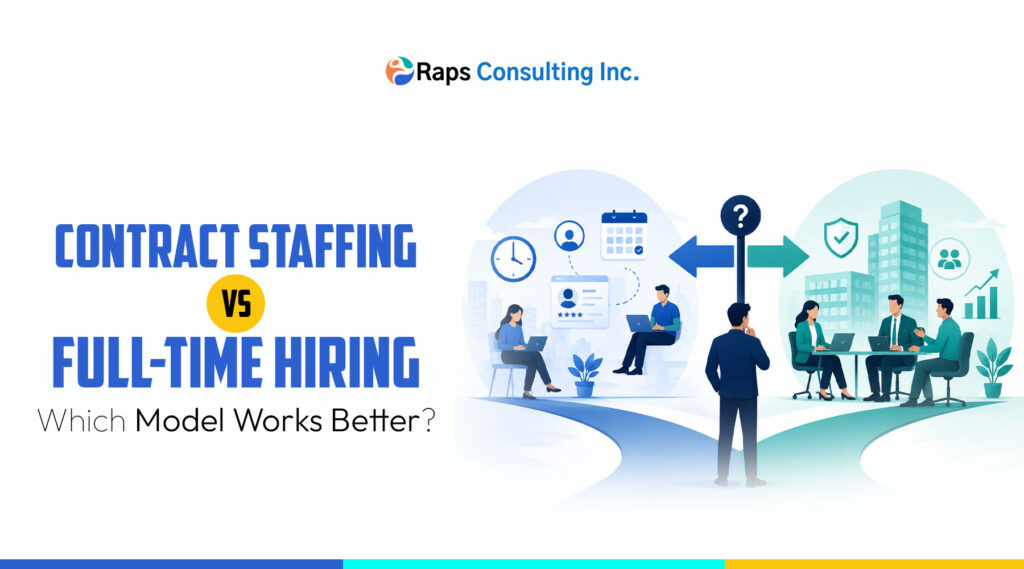
Businesses today face constant pressure to adapt to changing market demands, evolving technologies, and shifting workforce expectations. One of the most important decisions organizations make is determining the right hiring model to support growth and operational efficiency.
While traditional full-time hiring remains a cornerstone of workforce planning, many organizations are increasingly leveraging contract staffing and contingent workforce solutions to stay agile and competitive.
So, which model works better?
The answer depends on your business objectives, project requirements, budget, and long-term workforce strategy. This guide explores the advantages, challenges, and ideal use cases for both approaches to help you make an informed decision.
Understanding Contract Staffing
Contract staffing involves hiring professionals for a specific period, project, or business need. These workers are typically employed through a staffing agency or workforce solutions provider.
Organizations often use contract staffing when they need specialized expertise, temporary support, or additional resources for time-sensitive projects.
Common Examples of Contract Staffing
- IT implementation projects
- Software development initiatives
- Cybersecurity programs
- Seasonal workforce demands
- Data migration projects
- Healthcare staffing needs
- Short-term business expansions
Contract staffing provides businesses with access to skilled professionals without making a long-term employment commitment.
Understanding Full-Time Hiring
Full-time hiring involves recruiting employees who become permanent members of the organization. These employees receive company benefits, participate in long-term business initiatives, and contribute to organizational culture and growth.
Full-time employees are generally ideal for core business functions that require continuity, institutional knowledge, and long-term development.
Common Examples of Full-Time Roles
- Executive leadership
- Human resources
- Finance and accounting
- Operations management
- Customer success teams
- Strategic business functions
Permanent employees help create stability and support long-term organizational goals.
Contract Staffing vs Full-Time Hiring: Key Differences
- Hiring Speed
Contract Staffing
One of the biggest advantages of contract staffing is speed. Staffing providers often maintain pre-screened talent pools, allowing businesses to fill critical positions quickly.
Benefits:
- Faster recruitment cycles
- Reduced time-to-fill
- Immediate access to specialized talent
Full-Time Hiring
Permanent recruitment typically requires more extensive screening, interviewing, and onboarding processes.
Challenges:
- Longer hiring timelines
- Increased recruitment efforts
- Greater internal resource commitment
Winner: Contract Staffing
- Cost Considerations
Contract Staffing
Although hourly rates may appear higher, businesses often save on:
- Benefits administration
- Payroll taxes
- Training investments
- Employee development programs
- Long-term employment obligations
Contract staffing allows organizations to align workforce costs directly with project needs.
Full-Time Hiring
Permanent employees require:
- Salaries
- Health benefits
- Retirement contributions
- Paid leave
- Training and development investments
However, full-time employees may provide greater long-term value for ongoing business functions.
Winner: Depends on business requirements.
- Workforce Flexibility
Modern businesses must quickly respond to market changes and project demands.
Contract Staffing
Contract staffing offers exceptional workforce flexibility by allowing organizations to:
- Scale teams up or down
- Fill temporary skill gaps
- Support project-based work
- Adapt to changing business priorities
Full-Time Hiring
Permanent staffing offers less flexibility but greater continuity.
Organizations may face challenges when workforce needs change rapidly.
Winner: Contract Staffing
- Access to Specialized Skills
Many projects require niche expertise that may not justify a permanent hire.
Contract Staffing
Organizations can quickly access specialists in:
- Cloud computing
- Artificial intelligence
- Data analytics
- Cybersecurity
- ERP implementation
- Software development
This enables businesses to acquire critical skills exactly when needed.
Full-Time Hiring
Permanent hiring is ideal when specialized skills are required continuously across multiple business functions.
Winner: Contract Staffing
- Employee Engagement and Culture
Full-Time Hiring
Permanent employees often:
- Develop stronger company loyalty
- Contribute to organizational culture
- Build institutional knowledge
- Support long-term business initiatives
These factors can improve collaboration and retention.
Contract Staffing
Contract professionals are generally focused on delivering project outcomes rather than long-term organizational development.
While highly productive, they may have less involvement in company culture initiatives.
Winner: Full-Time Hiring
- Long-Term Business Growth
Full-Time Hiring
Organizations building strategic capabilities often benefit from maintaining a stable workforce.
Permanent employees help:
- Preserve institutional knowledge
- Develop leadership pipelines
- Strengthen customer relationships
- Support succession planning
Contract Staffing
Contract staffing supports growth by providing rapid access to talent during expansion phases.
Many organizations use contract staffing as a bridge while evaluating long-term workforce requirements.
Winner: Full-Time Hiring for core functions.
When Contract Staffing Is the Better Choice
Contract staffing works best when businesses need:
Project-Based Expertise
Temporary specialists can accelerate implementation projects without long-term commitments.
Rapid Workforce Expansion
Organizations experiencing sudden growth can quickly add qualified professionals.
Seasonal Demand Support
Industries with fluctuating demand benefit from workforce flexibility.
Technology Transformation
Digital transformation initiatives often require highly specialized skills that are not needed permanently.
Cost Control
Businesses can better manage workforce expenses by aligning staffing levels with business needs.
When Full-Time Hiring Is the Better Choice
Permanent hiring is often ideal when organizations need:
Long-Term Workforce Stability
Core business functions require consistent personnel and organizational continuity.
Leadership Development
Future leaders are typically developed through long-term employee engagement.
Strong Company Culture
Permanent employees contribute significantly to workplace culture and organizational identity.
Knowledge Retention
Critical business knowledge remains within the organization over time.
The Rise of Hybrid Workforce Strategies
Today, many successful organizations combine both models through a hybrid workforce approach.
A hybrid strategy allows businesses to:
- Maintain core full-time employees
- Utilize contract professionals for specialized projects
- Improve workforce agility
- Optimize labor costs
- Access a broader talent pool
This balanced approach helps organizations remain competitive while supporting long-term growth.
How Contingent Workforce Solutions Support Modern Businesses
Contingent workforce solutions provide organizations with structured approaches to managing contract talent.
These solutions help businesses:
- Source qualified professionals quickly
- Improve workforce scalability
- Reduce hiring risks
- Maintain compliance requirements
- Support workforce planning initiatives
As workforce demands become more dynamic, contingent workforce programs are increasingly becoming a strategic business advantage.
Conclusion
The debate between contract staffing and full-time hiring is not about choosing one model over the other. Instead, it is about identifying the right workforce strategy for specific business objectives.
Contract staffing provides speed, flexibility, and access to specialized expertise, making it ideal for project-based work and changing business needs. Full-time hiring offers stability, culture development, and long-term organizational growth.
For many organizations, the most effective solution is a hybrid workforce model that combines the strengths of both approaches.
By aligning your hiring strategy with business goals, workforce demands, and growth plans, you can build a workforce that supports both immediate success and long-term sustainability.
FAQs
- What is contract staffing?
Contract staffing is a hiring model where professionals are engaged for a specific project, duration, or business need, often through a staffing agency.
- What is the difference between contract staffing and full-time hiring?
Contract staffing provides temporary talent for specific needs, while full-time hiring involves permanent employees who support long-term organizational goals.
- Is contract staffing more cost-effective than full-time hiring?
Contract staffing can reduce costs related to benefits, onboarding, and long-term employment obligations, making it cost-effective for short-term needs.
- When should a business choose contract staffing?
Businesses should consider contract staffing when they need specialized expertise, project-based support, rapid hiring, or workforce flexibility.
- What are contingent workforce solutions?
Contingent workforce solutions help organizations manage temporary, contract, freelance, and project-based workers efficiently and compliantly.