


CRM Software Development Services: Features, Cost, Process & Hiring
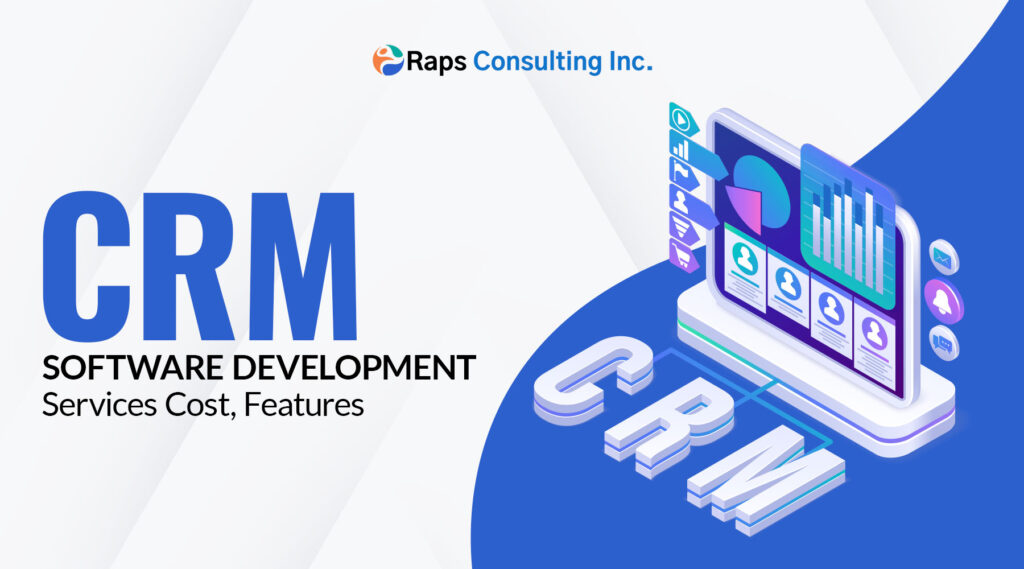
Table of Contents
- What Are CRM Software Development Services?
- Custom CRM vs. an Existing Platform: Which Should You Choose?
- What Features Should a CRM Have?
- What Technologies Are Used in CRM Development?
- How Much Does CRM Development Cost?
- How Long Does It Take to Build a CRM?
- How Do You Hire CRM Developers?
- How Do You Choose a CRM Development Company?
- CRM Software Development FAQs
Your CRM should help your team follow up, understand customers, and see what is happening across the sales process. When your team spends more time working around the software than using it, you may need to customize your current platform or build a system around your workflows.
CRM software development services can cover either route. This guide explains the features to prioritize, what affects cost and timing, and how to choose the right development team.
What Are CRM Software Development Services?
These services include planning, designing, customizing or building, integrating, and maintaining software that manages customer relationships. A development partner may configure an existing CRM, extend a platform such as Microsoft Dynamics 365, Salesforce, HubSpot, or Zoho, or build a separate application.
Typical work includes:
- Discovery: Map users, workflows, reporting needs, and current pain points.
- Development: Configure or build pipelines, records, automations, and dashboards.
- Integration: Connect approved systems such as email, ERP, accounting, or support tools.
- Migration: Clean, map, test, and transfer existing customer data.
- Support: Fix issues, improve features, and maintain security after launch.
Custom CRM vs. an Existing Platform: Which Should You Choose?
First decide whether a platform can meet your needs with configuration or supported extensions. A separate custom build is more appropriate when important workflows or integrations cannot be handled well within a platform.
| Factor | Separate custom build | Existing CRM with configuration or extensions |
| Time to launch | Usually longer | Usually faster for standard workflows |
| Initial investment | Typically higher | Often lower, though complex customization can add cost |
| Ongoing costs | Hosting, support, updates, and third-party services | Subscription, implementation, add-ons, and support |
| Flexibility | Greater control over product design | Depends on the platform and supported extensions |
| Integrations | Can be designed for specific systems; feasibility depends on available APIs | Depends on connectors, APIs, and plan limits |
| Data and code control | Defined by your architecture and development contract | Governed by platform terms and your contract |
Consider a custom build when your processes are unusually complex, your systems need tailored integration, or platform limitations create expensive workarounds. Consider an existing CRM when your workflows are fairly standard and speed of launch matters. Compare the total cost over several years before deciding; a custom build does not eliminate operating costs.
What Features Should a CRM Have?
Prioritize the work your team does every day:
- Contact and company records with clear ownership
- Lead and opportunity tracking
- Tasks, reminders, and activity history
- Search, filters, and useful reports
- Permissions appropriate to each user’s role
Once the basics work, consider automated follow-ups, approval flows, support tickets, custom dashboards, and mobile access. AI features such as call summaries or lead scoring need reliable data, human review, and a clear business use case; they are optional rather than a starting requirement.
For sensitive information, define access, retention, audit, and security requirements during discovery. Whether a system meets a regulation or standard depends on its configuration, operations, agreements, and independent assessment. A particular technology does not make a CRM compliant by itself.
What Technologies Are Used in CRM Development?
The stack depends on existing systems, the team’s skills, security needs, and future maintenance.
| Layer | Possible choices | Decision to make |
| User interface | React, Angular, or a platform’s native interface | What will users need on desktop and mobile? |
| Application and APIs | .NET, Java, Node.js, or Python | What fits the integrations and support team? |
| Data | PostgreSQL, SQL Server, or a platform data model | How will records, permissions, and reporting work? |
| Hosting | Azure, AWS, Google Cloud, or platform hosting | Who manages operations, backups, and access? |
| Delivery | Automated tests and deployment pipelines | How will changes be released safely? |
Platform development follows its own supported tools. For example, Dynamics 365 Sales uses Dataverse and can be extended with Power Platform. Ask the team to explain why its proposed architecture fits your workflows instead of choosing a stack from a generic list.
How Much Does CRM Development Cost?
There is no reliable fixed price without a defined scope. Configuring an existing platform, extending it, and building a separate CRM involve different work and ongoing charges. Any budget range should come from a scoped estimate with assumptions, deliverables, and exclusions.
| Scope | Typical work to estimate |
| Focused first release | Core records, one pipeline, basic reporting, limited integrations |
| Expanded CRM | Multiple workflows, automation, permissions, dashboards, and migrations |
| Complex organization-wide system | Several teams, legacy integrations, advanced security, and staged rollout |
The main cost drivers are workflow complexity, number and quality of integrations, data migration, user roles, reporting, testing, and training. Budget for hosting or subscriptions, API charges, maintenance, security reviews, and future changes as well as the initial build.
To get a useful quote, document your current process, must-have features, user count, systems to connect, sample reports, and launch priorities. Request a phased estimate so you can compare the first release with later enhancements.
Planning a CRM project? Request a CRM consultation
How Long Does It Take to Build a CRM?
Timing depends on the route and the scope. A straightforward platform setup can move faster than a separate application. Complex data migration, legacy integrations, approvals, and testing can extend either project. Ask for a schedule with assumptions and milestones rather than treating a generic month range as a promise.
- Discover: Interview users and agree on goals and requirements.
- Design: Map records, screens, permissions, and integrations.
- Build: Configure or develop a prioritized first release.
- Test: Check workflows, data quality, access, and integrations with real users.
- Launch: Migrate data, train teams, and monitor adoption.
- Improve: Use feedback and usage data to plan the next release.
How Do You Hire CRM Developers?
The right team depends on the route. A platform project may need a specialist in that product, while a separate build needs application, data, integration, and quality assurance skills. Larger projects may also need a business analyst, designer, project lead, and cloud specialist.
Ask candidates to show how they have:
- Translated sales or service workflows into usable software
- Connected systems through APIs and handled failed syncs
- Planned migration, duplicate cleanup, and data validation
- Designed roles, access controls, backups, and auditability
- Tested releases and supported users after launch
Hiring options: An internal team offers direct long-term ownership; individual contractors suit clearly scoped work; a dedicated development partner can bring several roles together. Compare actual team members, delivery process, ownership terms, and ongoing support alongside price. Hourly rates vary substantially by location, seniority, specialty, and contract terms, so request current proposals for your scope.
How Do You Choose a CRM Development Company?
Request relevant examples and a walkthrough of a similar workflow. Then ask:
- Will you configure a platform, extend one, or build separately, and why?
- Who will do the work, and how will we review progress?
- What is included in the estimate, and how are changes priced?
- How will you migrate and verify our data?
- Who owns the deliverables, code, documentation, and accounts?
- What support, security maintenance, and handover are included?
Look for specific answers and a delivery plan based on your business process. A demo alone cannot show whether a team can handle your data and integrations.
CRM Software Development FAQs
Is a custom CRM better than Salesforce or HubSpot?
It depends on your workflows, budget, and timeline. Start by testing whether an existing platform and its supported extensions meet your needs. Compare that route with a separate build using both implementation and ongoing costs.
What affects the cost of a custom CRM?
Features, integrations, migration, permissions, reporting, testing, and rollout requirements have the greatest effect. A scoped estimate is more useful than a broad market price range.
How long does CRM development take?
A schedule should account for discovery, design, build, testing, migration, training, and feedback. The first release can be limited to essential workflows, with other features added later.
Can a CRM connect to our existing software?
Often, yes, if the other system provides a suitable API or supported integration. Check access, data quality, sync frequency, and failure handling before promising a connection.
Should we add AI features to the first release?
Only when a feature solves a clear problem and the underlying data is ready. Start with accurate records and dependable workflows; evaluate AI features against measurable outcomes and review their output.
Plan the CRM Around the Work
The best CRM route depends on what your team needs to do, what your current tools can support, and what it will cost to operate the system over time. Define the first release, validate integration and data needs, and choose a team that can explain its decisions clearly.
Ready to scope your CRM? Talk to RAPS about CRM development