


How AI Automation Is Reducing Operational Bottlenecks in Modern Businesses 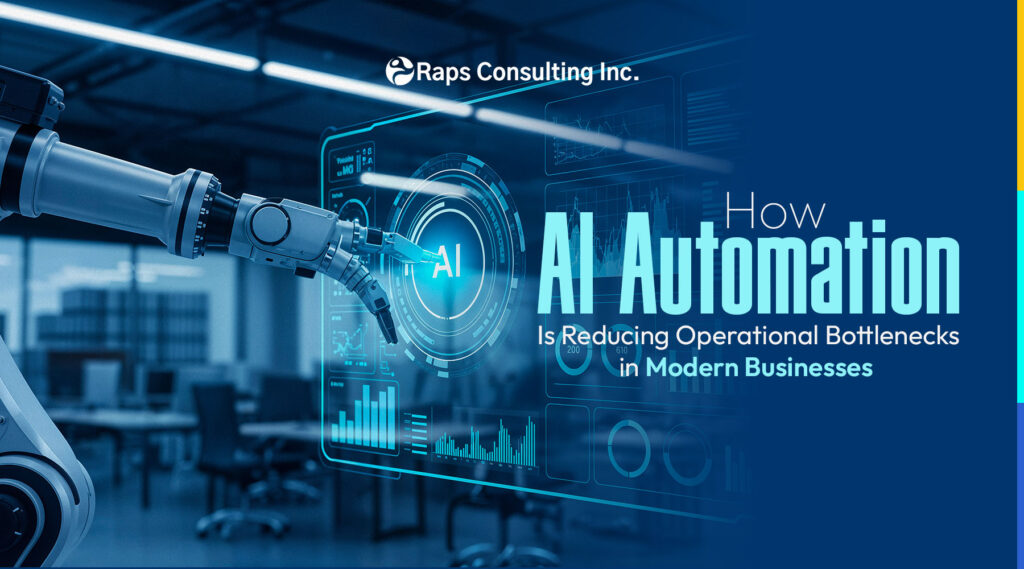
Every growing business eventually faces operational bottlenecks. As organizations scale, manual processes, disconnected systems, approval delays, and repetitive administrative tasks can slow productivity and impact customer experience.
Traditional automation has helped address some of these challenges, but modern organizations are increasingly turning to AI workflow automation to create smarter, faster, and more adaptive business processes.
From automating approvals and customer service interactions to optimizing supply chains and analyzing operational data, AI-powered solutions are helping businesses eliminate inefficiencies and improve overall performance.
This article explores how AI automation is reducing operational bottlenecks and why enterprise leaders are making it a critical part of their digital transformation strategy.
What Are Operational Bottlenecks?
Operational bottlenecks occur when a process, task, or system slows down the flow of work within an organization. These constraints can reduce efficiency, increase costs, and limit scalability.
Common bottlenecks include:
- Manual data entry
- Slow approval workflows
- Repetitive administrative tasks
- Information silos
- Resource allocation delays
- Customer support backlogs
- Inconsistent reporting processes
As businesses grow, these challenges become more difficult to manage without advanced automation technologies.
The Evolution From Traditional Automation to AI Automation
Traditional automation relies on predefined rules and structured workflows. While effective for repetitive tasks, it often struggles with complex decision-making and dynamic business environments.
AI workflow automation goes beyond rule-based processes by incorporating:
- Machine learning
- Natural language processing
- Predictive analytics
- Intelligent document processing
- Automated decision support
This enables systems to learn from data, adapt to changing conditions, and handle increasingly sophisticated business tasks.
How AI Workflow Automation Eliminates Operational Bottlenecks
- Automating Repetitive Tasks
Many operational delays stem from employees spending time on routine administrative work.
Examples include:
- Data entry
- Invoice processing
- Employee onboarding tasks
- Report generation
- Customer inquiries
AI-powered systems can automate these activities with minimal human intervention, allowing employees to focus on higher-value work.
Benefits include:
- Faster task completion
- Reduced human error
- Increased productivity
- Lower operational costs
- Accelerating Decision-Making
Business leaders often rely on multiple reports, spreadsheets, and data sources to make decisions.
AI automation can:
- Aggregate data from multiple systems
- Analyze trends in real time
- Identify anomalies
- Generate recommendations
This allows organizations to make informed decisions faster while reducing delays caused by manual analysis.
- Improving Workflow Visibility
A major cause of bottlenecks is the lack of visibility into operational processes.
Enterprise AI tools provide:
- Real-time dashboards
- Process monitoring
- Performance analytics
- Workflow tracking
Managers can quickly identify slow-moving tasks and take corrective action before issues escalate.
- Streamlining Customer Service Operations
Customer support teams frequently face challenges such as:
- High ticket volumes
- Long response times
- Repetitive inquiries
AI-powered chatbots and virtual assistants can:
- Handle common customer questions
- Route requests automatically
- Provide 24/7 support
- Assist service agents with recommendations
This reduces service delays while improving customer satisfaction.
- Enhancing Document Processing
Organizations manage large volumes of documents daily, including:
- Contracts
- Purchase orders
- Invoices
- Compliance records
- Employee documents
AI-powered document processing tools can:
- Extract information automatically
- Classify documents
- Validate data
- Trigger workflows
The result is faster processing and fewer manual bottlenecks.
- OptimizingResource Allocation
Resource planning often becomes a challenge when businesses rely on manual forecasting.
AI automation can analyze:
- Historical trends
- Demand patterns
- Workforce utilization
- Project workloads
This enables organizations to allocate resources more effectively and avoid operational slowdowns.
Industries Benefiting From AI Business Process Automation
Manufacturing
Manufacturers use AI automation to:
- Improve production planning
- Predict equipment maintenance needs
- Optimize inventory management
- Reduce downtime
Healthcare
Healthcare organizations leverage AI to:
- Streamline administrative workflows
- Manage patient scheduling
- Process documentation efficiently
- Improve operational coordination
Financial Services
Financial institutions use AI to:
- Automate compliance processes
- Detect anomalies
- Process applications faster
- Improve customer service operations
Retail
Retail businesses benefit from:
- Demand forecasting
- Inventory optimization
- Personalized customer experiences
- Automated order processing
Key Benefits of Enterprise AI Tools
Organizations implementing AI workflow automation often experience:
Increased Productivity
Employees spend less time on repetitive tasks and more time on strategic initiatives.
Faster Process Execution
Automated workflows reduce delays across departments and business functions.
Improved Accuracy
AI minimizes manual errors and ensures greater consistency in operations.
Better Scalability
Businesses can handle increasing workloads without proportionally increasing operational costs.
Enhanced Customer Experience
Faster response times and more efficient processes improve customer satisfaction and retention.
Best Practices for Implementing AI Automation
To maximize success, organizations should:
Identify High-Impact Bottlenecks
Focus first on processes that create the greatest operational delays.
Establish Clear Objectives
Define measurable goals such as:
- Reduced processing time
- Lower operational costs
- Improved customer satisfaction
- Increased productivity
Integrate Existing Systems
Ensure AI solutions work seamlessly with existing business applications and data sources.
Monitor Performance Continuously
Use analytics and reporting tools to measure outcomes and identify opportunities for optimization.
Encourage Employee Adoption
Provide training and support to help teams understand how AI enhances their work rather than replacing it.
The Future of AI-Powered Operations
As enterprise AI tools continue to evolve, organizations will gain access to increasingly intelligent automation capabilities.
Future developments may include:
- Autonomous workflow management
- Predictive operational planning
- AI-driven business orchestration
- Advanced conversational interfaces
- Real-time process optimization
Businesses that invest in AI automation today will be better positioned to adapt, scale, and compete in a rapidly changing marketplace.
Conclusion
Operational bottlenecks can limit growth, reduce productivity, and impact customer satisfaction. AI workflow automation offers a practical solution by streamlining processes, accelerating decision-making, improving visibility, and reducing manual workloads.
As organizations continue their digital transformation journeys, business process automation powered by AI will play a central role in creating more agile, efficient, and scalable operations.
Companies that strategically implement enterprise AI tools can unlock significant operational improvements while positioning themselves for long-term success in an increasingly competitive business environment.
FAQs
- What is AI workflow automation?
AI workflow automation uses artificial intelligence technologies such as machine learning and predictive analytics to automate business processes and improve operational efficiency.
- How does AI reduce operational bottlenecks?
AI reduces bottlenecks by automating repetitive tasks, improving decision-making, streamlining workflows, and providing real-time operational insights.
- What industries benefit most from AI automation?
Manufacturing, healthcare, financial services, retail, logistics, and professional services organizations commonly benefit from AI-powered automation solutions.
- Is AI automation only for large enterprises?
No. Businesses of all sizes can implement AI automation solutions to improve efficiency, reduce costs, and support growth.
- What is the difference between traditional automation and AI automation?
Traditional automation follows predefined rules, while AI automation can learn from data, adapt to changing conditions, and support more complex decision-making processes.