


How Workforce Analytics Improves Hiring and Retention Decisions 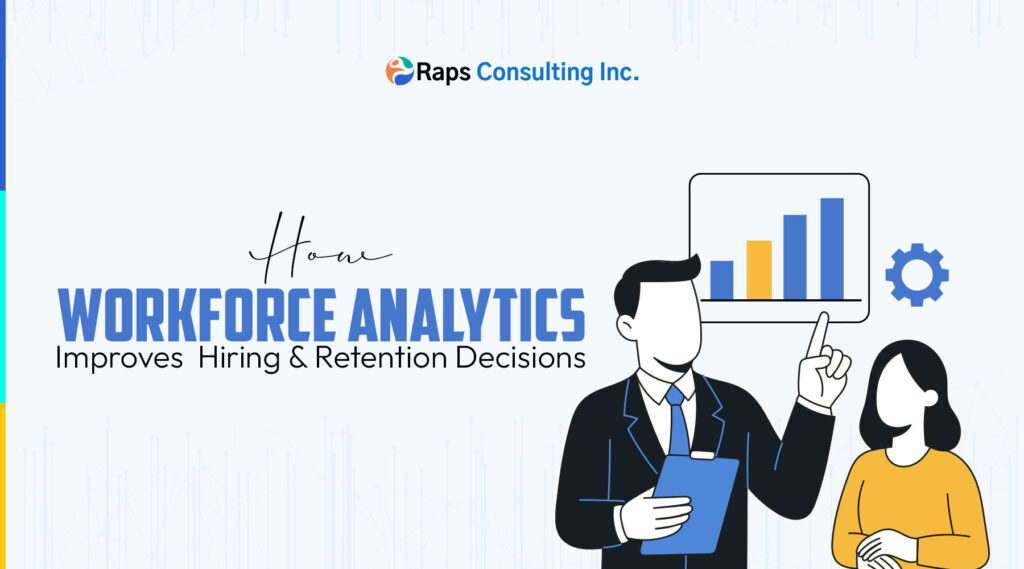
Hiring the right people and retaining top talent have become two of the biggest challenges facing businesses today. Organizations invest significant resources in recruitment, onboarding, training, and employee development, yet many still struggle with high turnover rates and inefficient hiring processes.
The problem often isn’t a lack of effort—it’s a lack of actionable insights.
This is where workforce analytics tools are transforming human resource management. By leveraging employee data, businesses can identify hiring trends, predict workforce needs, understand employee behavior, and make informed decisions that improve both recruitment and retention outcomes.
In today’s competitive labor market, organizations that use employee analytics software and advanced HR reporting systems gain a significant advantage in attracting, developing, and retaining talent.
What Is Workforce Analytics?
Workforce analytics refers to the process of collecting, analyzing, and interpreting employee-related data to improve workforce management decisions.
Rather than relying on assumptions or manual reporting, workforce analytics enables organizations to understand trends across areas such as:
- Recruitment performance
- Employee turnover
- Workforce productivity
- Employee engagement
- Performance management
- Training effectiveness
- Diversity and inclusion metrics
- Succession planning
By converting workforce data into meaningful insights, HR teams can make more strategic decisions that align with business goals.
Why Traditional HR Reporting Is No Longer Enough
Many organizations still rely on spreadsheets and basic reports to track workforce information. While these methods provide historical data, they often fail to deliver real-time insights that leaders need for proactive decision-making.
Common challenges include:
- Delayed reporting
- Data inaccuracies
- Limited visibility across departments
- Inconsistent metrics
- Difficulty identifying workforce trends
Modern HR reporting systems solve these challenges by centralizing workforce data and providing real-time dashboards that support faster and more accurate decisions.
How Workforce Analytics Improves Hiring Decisions
- Identifiesthe Most Effective Recruitment Channels
Not all recruitment sources produce the same quality candidates.
Workforce analytics helps organizations evaluate:
- Job board performance
- Referral program effectiveness
- Social recruiting outcomes
- Agency performance
- Internal mobility success rates
These insights allow businesses to invest in recruitment channels that consistently deliver top-performing employees.
- Reduces Time-to-Hire
Extended hiring cycles can result in lost productivity and increased recruitment costs.
Workforce analytics tools help HR teams monitor:
- Candidate pipeline stages
- Interview conversion rates
- Offer acceptance rates
- Hiring bottlenecks
By identifying delays in the recruitment process, organizations can streamline workflows and fill positions faster.
- Improves Candidate Quality
Analytics enables businesses to examine the characteristics of successful employees and compare them against new candidates.
Organizations can identify:
- Skills associated with high performers
- Experience patterns
- Educational backgrounds
- Behavioral indicators
This data-driven approach improves hiring accuracy and reduces costly mis-hires.
- Supports Workforce Planning
Hiring decisions should align with future business needs.
Workforce analytics helps organizations forecast:
- Staffing requirements
- Skills shortages
- Retirement trends
- Expansion-related hiring needs
This allows HR leaders to proactively build talent pipelines before workforce gaps occur.
How Workforce Analytics Improves Employee Retention
Understanding Why Employees Leave
Employee turnover can be expensive and disruptive.
Using employee analytics software, organizations can analyze factors that contribute to employee departures, including:
- Compensation trends
- Manager effectiveness
- Employee engagement scores
- Workload distribution
- Career development opportunities
- Training participation
Identifying these patterns allows businesses to address retention risks before employees decide to leave.
Predicting Employee Turnover
One of the most valuable applications of workforce analytics is predictive retention modeling.
Advanced analytics platforms can identify warning signs such as:
- Declining engagement levels
- Increased absenteeism
- Reduced productivity
- Limited internal mobility
- Low participation in development programs
With early visibility into these indicators, HR teams can implement targeted retention strategies.
Enhancing Employee Engagement
Engaged employees are generally more productive and more likely to remain with an organization.
Workforce analytics helps HR teams measure:
- Employee satisfaction
- Manager effectiveness
- Team performance
- Feedback participation
- Workplace sentiment
These insights help leaders create a better employee experience and strengthen organizational culture.
Supporting Career Development Initiatives
Employees are more likely to stay with companies that invest in their growth.
Analytics enables organizations to:
- Track learning progress
- Identify skill gaps
- Monitor promotion readiness
- Measure training effectiveness
This supports more personalized development programs and creates stronger career pathways.
Key Metrics Organizations Should Track
To maximize the value of workforce analytics, businesses should monitor key performance indicators such as:
Recruitment Metrics
- Time-to-hire
- Cost-per-hire
- Source-of-hire
- Offer acceptance rate
- Candidate conversion rates
Retention Metrics
- Employee turnover rate
- Voluntary turnover rate
- Retention rate
- Employee tenure
- Internal mobility rate
Performance Metrics
- Productivity levels
- Training completion rates
- Goal achievement rates
- Performance review outcomes
Engagement Metrics
- Employee satisfaction scores
- Engagement survey results
- Attendance rates
- Manager effectiveness scores
Monitoring these metrics through centralized HR reporting systems helps organizations make continuous workforce improvements.
Benefits of Workforce Analytics for Business Leaders
While HR teams often lead workforce analytics initiatives, the benefits extend across the entire organization.
Key advantages include:
Better Strategic Planning
Leaders can make workforce decisions based on data rather than assumptions.
Reduced Hiring Costs
Improved recruitment efficiency lowers sourcing and onboarding expenses.
Increased Productivity
Organizations can identify performance trends and optimize workforce allocation.
Stronger Employee Retention
Proactive retention strategies help reduce turnover and preserve institutional knowledge.
Improved Compliance and Reporting
Modern workforce analytics solutions simplify reporting requirements and provide greater workforce visibility.
Choosing the Right Workforce Analytics Solution
When evaluating workforce analytics platforms, businesses should look for features such as:
- Real-time dashboards
- Customizable reporting
- Predictive analytics capabilities
- Recruitment analytics
- Employee engagement tracking
- Workforce planning tools
- Integration with HR systems
- Data security and compliance controls
The right solution should provide actionable insights while remaining easy for HR teams and business leaders to use.
The Future of Workforce Analytics
As organizations continue to embrace digital transformation, workforce analytics will become increasingly important for managing talent effectively.
Artificial intelligence and predictive analytics are enabling businesses to move beyond historical reporting and toward proactive workforce management. Companies that adopt advanced workforce analytics capabilities today will be better positioned to attract, develop, and retain talent in an increasingly competitive market.
Conclusion
Hiring and retaining top talent requires more than intuition—it requires data-driven decision-making. Modern workforce analytics tools, employee analytics software, and advanced HR reporting systems provide organizations with the insights needed to improve recruitment outcomes, reduce turnover, strengthen employee engagement, and optimize workforce planning.
Businesses that leverage workforce analytics gain a clearer understanding of their workforce and are better equipped to make strategic talent decisions that support long-term growth and success.
FAQs
- What are workforce analytics tools?
Workforce analytics tools are software solutions that collect, analyze, and visualize employee data to help organizations make informed decisions about hiring, retention, performance management, and workforce planning.
- How do workforce analytics improve hiring decisions?
Workforce analytics helps HR teams identify the most effective recruitment channels, reduce time-to-hire, improve candidate quality, and forecast future staffing needs using data-driven insights.
- What is employee analytics software used for?
Employee analytics software is used to track workforce metrics such as employee engagement, productivity, turnover, performance, and training effectiveness. It helps organizations optimize workforce management and retention strategies.
- How can workforce analytics reduce employee turnover?
Workforce analytics can identify patterns and risk factors associated with employee departures, such as low engagement, poor manager relationships, or lack of career growth opportunities, enabling proactive retention efforts.
- What metrics should businesses track using HR reporting systems?
Organizations commonly track metrics such as time-to-hire, cost-per-hire, employee turnover rate, retention rate, employee engagement scores, absenteeism, productivity levels, and training completion rates.
- Are workforce analytics tools suitable for small and mid-sized businesses?
Yes. Many workforce analytics solutions are scalable and can help small and mid-sized businesses improve hiring efficiency, workforce planning, and employee retention without requiring large HR teams.
- What features should businesses look for in workforce analytics software?
Key features include real-time dashboards, customizable reports, predictive analytics, employee engagement tracking, workforce planning tools, recruitment analytics, and integration with existing HR systems.
- How do HR reporting systems support strategic workforce planning?
HR reporting systems provide visibility into workforce trends, skill gaps, turnover patterns, and future staffing requirements, helping organizations make proactive workforce planning decisions.