


Why Companies Are Moving From Traditional Servers to Cloud Infrastructure 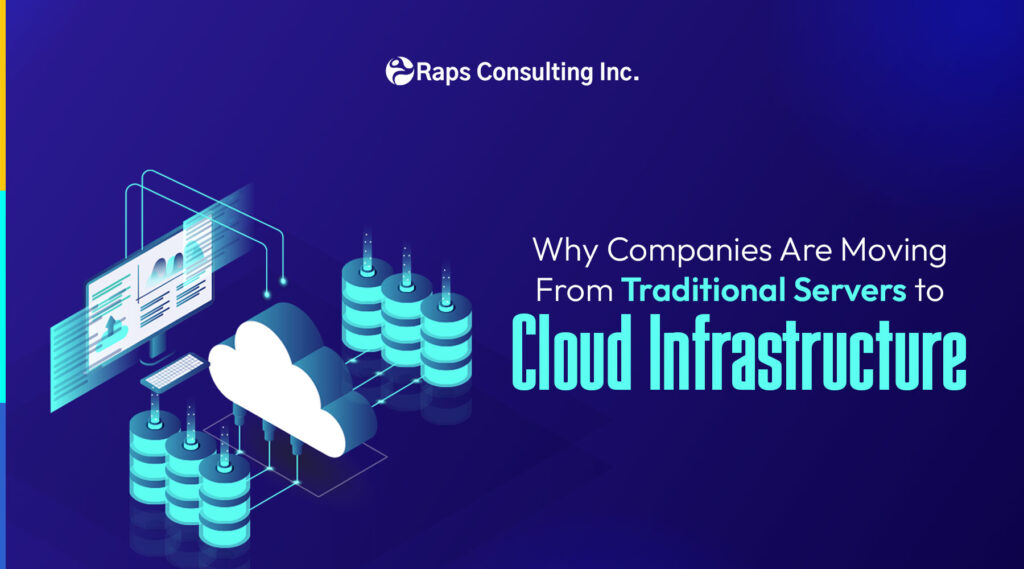
For years, traditional on-premise servers were considered the backbone of enterprise IT infrastructure. Businesses invested heavily in physical servers, networking equipment, data centers, maintenance teams, and hardware upgrades to keep operations running.
But the modern business environment has changed dramatically.
Today, organizations are under pressure to move faster, scale efficiently, support remote teams, strengthen cybersecurity, and reduce operational costs. As a result, companies across industries are rapidly shifting from traditional server environments to cloud infrastructure.
Cloud transformation is no longer just a technology trend. It has become a strategic business decision.
From startups to large enterprises, businesses are adopting cloud infrastructure solutions to improve flexibility, modernize operations, and prepare for long-term digital growth.
In this blog, we’ll explore why companies are making this transition, the limitations of traditional servers, and how cloud infrastructure is reshaping modern IT operations.
The Limitations of Traditional Server Infrastructure
Traditional servers operate within physical office spaces or private data centers. While this model worked for many years, it often creates several operational and financial challenges in today’s fast-moving environment.
- High Infrastructure Costs
On-premise server environments require significant upfront investment, including:
- Physical servers
- Storage hardware
- Networking equipment
- Cooling systems
- Power backup systems
- IT maintenance resources
Beyond the initial purchase, businesses must also manage ongoing expenses such as upgrades, maintenance contracts, repairs, and energy consumption.
For growing organizations, these costs can become difficult to sustain.
- Limited Scalability
Traditional infrastructure is not designed for rapid scaling.
If a business suddenly needs additional computing power, storage, or bandwidth, new hardware often needs to be purchased, configured, and installed manually. This process can take weeks or even months.
Modern businesses require infrastructure that can scale instantly based on demand.
Cloud infrastructure allows organizations to scale resources up or down in real time without major hardware investments.
- Maintenance and Downtime Challenges
Managing physical servers requires continuous monitoring and maintenance.
Internal IT teams often spend large amounts of time handling:
- Server updates
- Hardware failures
- Security patches
- Backup management
- Disaster recovery planning
Unexpected outages can disrupt operations, reduce productivity, and impact customer experience.
Cloud providers reduce this burden by managing infrastructure reliability, availability, and performance at scale.
- Difficulty Supporting Remote and Hybrid Work
The shift toward remote and hybrid work environments exposed major limitations in traditional infrastructure models.
Employees now need secure access to systems, files, applications, and collaboration tools from multiple locations and devices.
Cloud infrastructure enables:
- Secure remote access
- Centralized collaboration
- Real-time data access
- Flexible workforce operations
This has become essential for modern enterprises.
What Is Cloud Infrastructure?
Cloud infrastructure refers to computing resources delivered over the internet instead of being hosted entirely on physical, on-site servers.
These resources may include:
- Virtual servers
- Cloud storage
- Databases
- Networking
- Security services
- Software platforms
- Backup and disaster recovery systems
Instead of purchasing and maintaining physical hardware, businesses can access these services on demand through cloud providers.
Common cloud deployment models include:
- Public cloud
- Private cloud
- Hybrid cloud
- Multi-cloud environments
Major cloud platforms include:
- Microsoft Azure
- Amazon Web Services (AWS)
- Google Cloud Platform (GCP)
Why Businesses Are Moving to Cloud Infrastructure
- Better Scalability and Flexibility
One of the biggest advantages of cloud infrastructure solutions is scalability.
Businesses can:
- Increase resources during high demand
- Reduce unused capacity during slower periods
- Launch applications faster
- Expand operations globally
This flexibility allows organizations to respond quickly to changing business needs without large infrastructure investments.
- Reduced Operational Costs
Cloud infrastructure helps reduce:
- Hardware expenses
- Data center costs
- Energy consumption
- Maintenance overhead
- IT management complexity
Most cloud environments operate on a pay-as-you-go model, allowing businesses to pay only for the resources they actually use.
This makes budgeting more predictable and cost-efficient.
- Improved Business Continuity and Disaster Recovery
Traditional backup systems can be expensive and difficult to manage.
Cloud environments often include:
- Automated backups
- Geographic redundancy
- Disaster recovery capabilities
- High availability systems
This improves business resilience and reduces the risk of major operational disruptions.
- Stronger Security and Compliance Capabilities
Modern cloud providers invest heavily in cybersecurity infrastructure and compliance standards.
Cloud platforms often include:
- Identity and access management
- Data encryption
- Threat detection
- Security monitoring
- Compliance frameworks
While security remains a shared responsibility, cloud environments can provide stronger protection than outdated on-premise systems when properly configured.
- Faster Innovation and Digital Transformation
Cloud infrastructure supports modern technologies such as:
- Artificial intelligence
- Data analytics
- Automation
- Machine learning
- IoT integrations
Businesses can deploy new applications and services faster without waiting for hardware procurement cycles.
This accelerates innovation and improves competitiveness.
The Role of Server Migration Services
Moving from traditional servers to the cloud requires careful planning and execution.
This is where server migration services become important.
A structured migration strategy helps organizations:
- Minimize downtime
- Protect business-critical data
- Ensure application compatibility
- Improve security configurations
- Optimize performance after migration
Common migration approaches include:
- Lift-and-shift migration
- Replatforming
- Cloud-native modernization
- Hybrid migration strategies
Experienced cloud partners can help businesses choose the right migration path based on operational goals and existing infrastructure.
Industries Accelerating Cloud Transformation
Cloud transformation is happening across nearly every industry.
Healthcare
Healthcare organizations use cloud infrastructure for:
- Secure data management
- Telehealth platforms
- Analytics
- Collaboration systems
Manufacturing
Manufacturers leverage cloud systems for:
- Supply chain visibility
- IoT integration
- ERP modernization
- Predictive maintenance
Financial Services
Financial institutions use cloud infrastructure to improve:
- Security
- Data processing
- Customer experience
- Regulatory compliance
Education
Educational institutions are adopting cloud platforms for:
- Remote learning
- Student management systems
- Collaboration tools
- Scalable digital infrastructure
Hybrid Cloud Is Becoming a Popular Approach
Not every organization moves fully to the cloud immediately.
Many businesses adopt hybrid cloud models that combine:
- Existing on-premise infrastructure
- Public cloud services
- Private cloud environments
This approach allows businesses to modernize gradually while maintaining operational control over sensitive systems or legacy applications.
Hybrid cloud strategies also provide flexibility during large-scale digital transformation initiatives.
Key Considerations Before Moving to the Cloud
Before starting a cloud migration project, businesses should evaluate:
Current Infrastructure
Understand which systems are outdated, business-critical, or cloud-ready.
Security Requirements
Identify compliance obligations and data protection needs.
Migration Complexity
Assess application dependencies and integration requirements.
Cost Optimization
Compare long-term operational costs between on-premise and cloud models.
Long-Term Business Goals
Ensure cloud adoption aligns with growth, scalability, and innovation objectives.
The Future of Enterprise Infrastructure
Cloud infrastructure is becoming the foundation of modern business operations.
Organizations are increasingly prioritizing:
- Scalability
- Agility
- Security
- Automation
- Digital collaboration
- Data-driven decision-making
Traditional server environments alone can no longer support the speed and flexibility businesses require today.
As technology continues evolving, cloud transformation will remain a major driver of operational efficiency and competitive advantage.
Final Thoughts
The move from traditional servers to cloud infrastructure is not simply about replacing hardware. It’s about enabling smarter, faster, and more scalable business operations.
Companies adopting cloud infrastructure solutions are improving flexibility, reducing operational burdens, supporting remote work, and preparing for future growth.
Whether through full cloud adoption or hybrid environments, businesses are increasingly recognizing that modern infrastructure is essential for long-term success in a digital-first world.
Organizations that invest in strategic cloud transformation today will be better positioned to innovate, scale, and adapt in the years ahead.
FAQs
What is cloud infrastructure?
Cloud infrastructure refers to virtual computing resources such as servers, storage, networking, and software services delivered over the internet instead of relying entirely on physical on-premise hardware.
Why are companies moving away from traditional servers?
Businesses are moving away from traditional servers to improve scalability, reduce infrastructure costs, support remote work, strengthen security, and accelerate digital transformation.
What are server migration services?
Server migration services help businesses move applications, workloads, and data from on-premise infrastructure to cloud environments with minimal disruption.
Is cloud infrastructure more secure than traditional servers?
Cloud platforms can offer advanced security features, monitoring tools, and compliance capabilities. However, proper configuration and security management remain important.
What is hybrid cloud infrastructure?
Hybrid cloud infrastructure combines on-premise systems with public or private cloud environments, allowing businesses to balance flexibility, security, and operational control.